Urban Rest Corner
A furniture intervention at Jerusalem’s Central Bus Station — a moment of pause inside the noise.
- Year
- 2024
- Role
- Concept · Design · Team Project
- Category
- Furniture · Public Space · Inclusive Design
Context
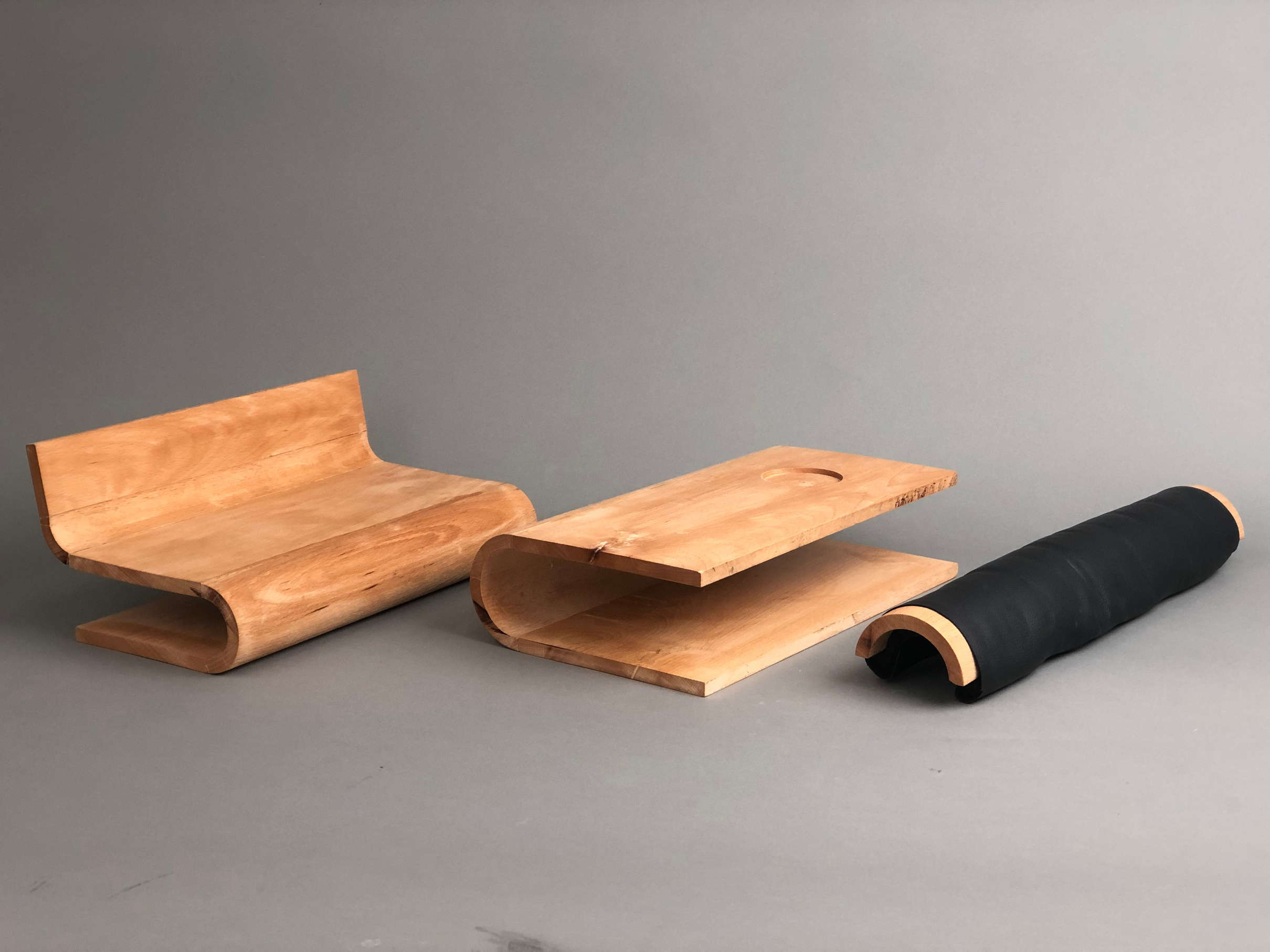
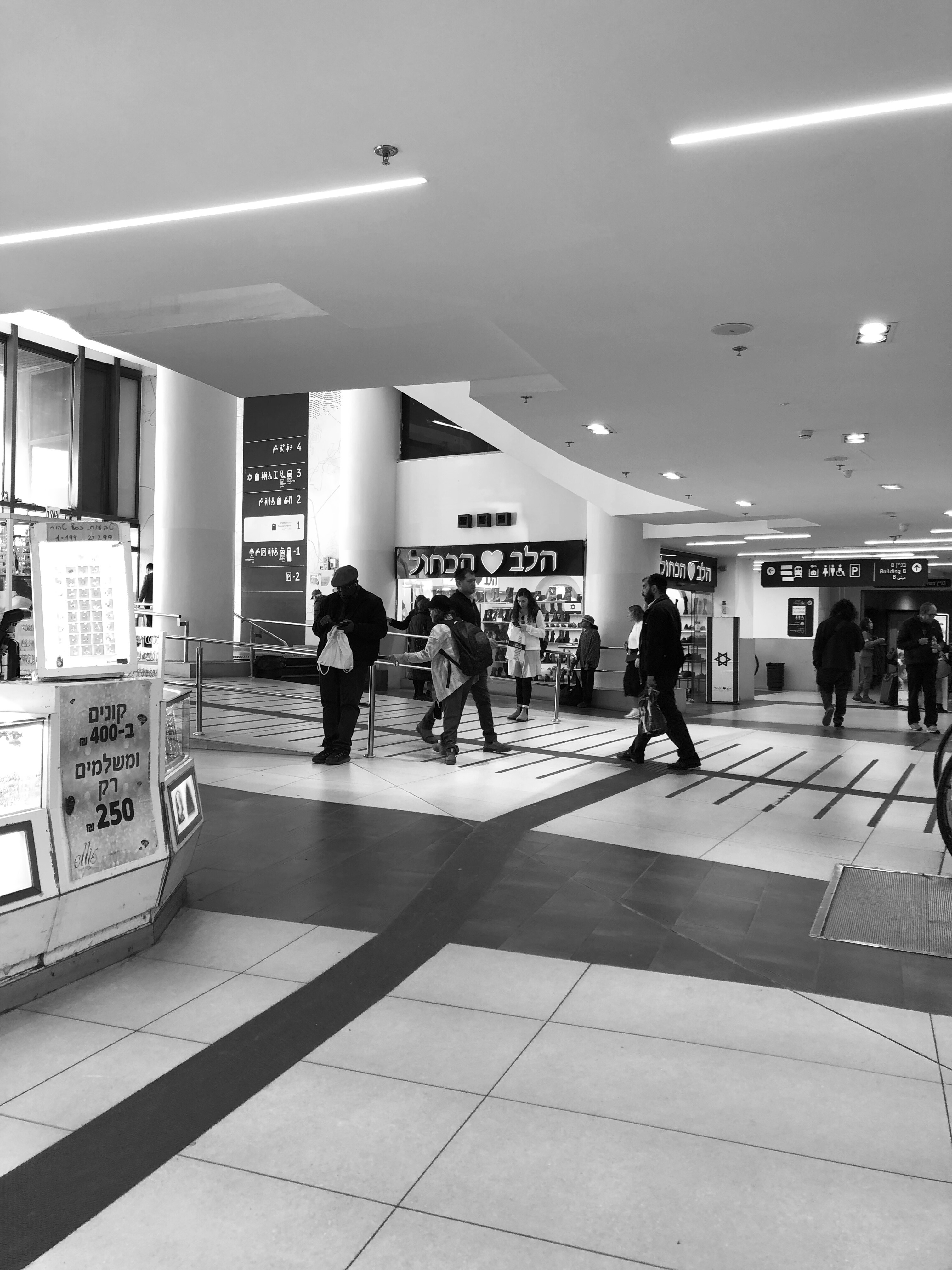
Jerusalem’s Central Bus Station is in constant motion — a daily transit point for thousands of people, with an industrial language all of its own: cold materials, sharp edges, hard surfaces, fluorescent light. The brief was to look at how people actually behave inside that environment and to design a contrast — an object that lets someone slow down, gather themselves, and breathe inside a dynamic, noisy space.
Developed in the Space and User course under Galit Shabo and Hemdat Rosintzky, as a team project.
Process
- 01
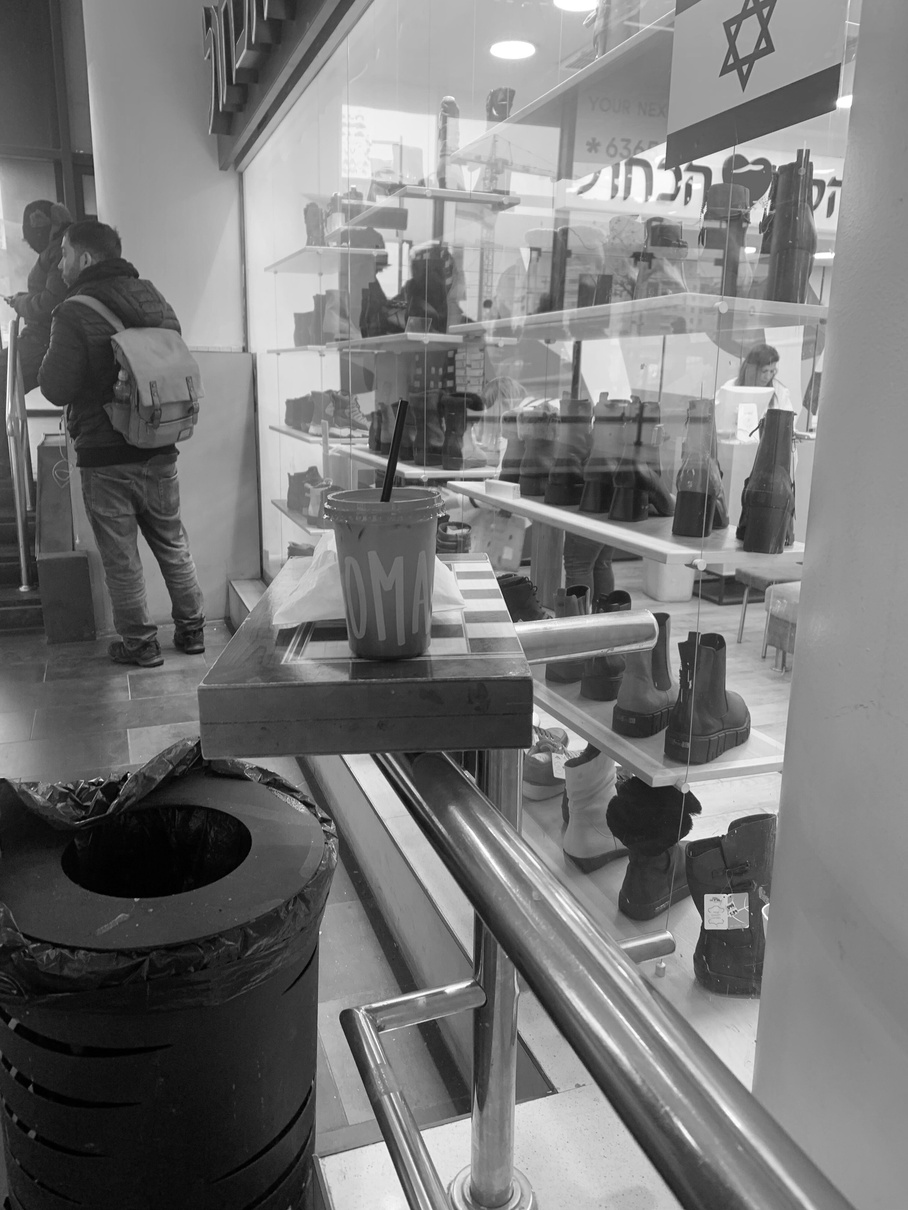
Observation and mapping: documenting where people actually pause at the station — the columns they lean on, the railings they turn into shelves, the corners that quietly become phone booths.
- 02
Choosing a territory and sharpening the need: a railing near the main entrance, already used by passers-by to balance shopping bags and coffee cups. The brief narrowed to “a place to lean, a place to set down a bag, a place to rest a coffee.”
- 03
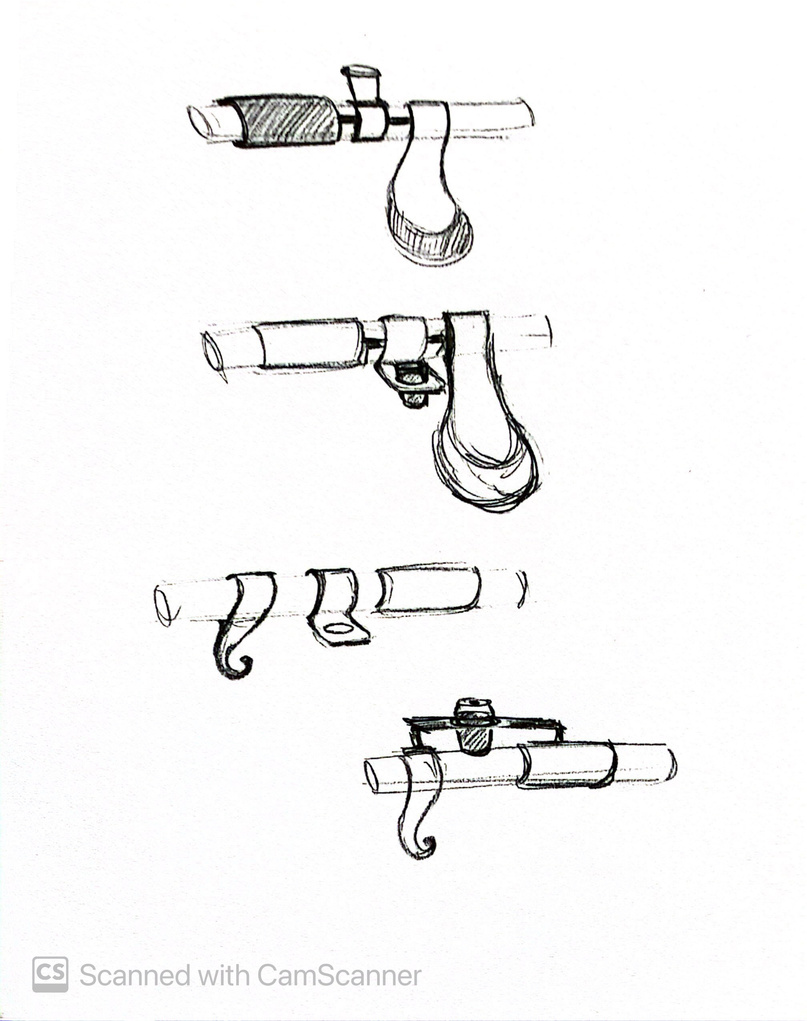
Form development and materials: rounding sharp edges; using wood and textile to suggest the warmth of a living room — the deliberate opposite of the station’s industrial, cold language.
Outcome
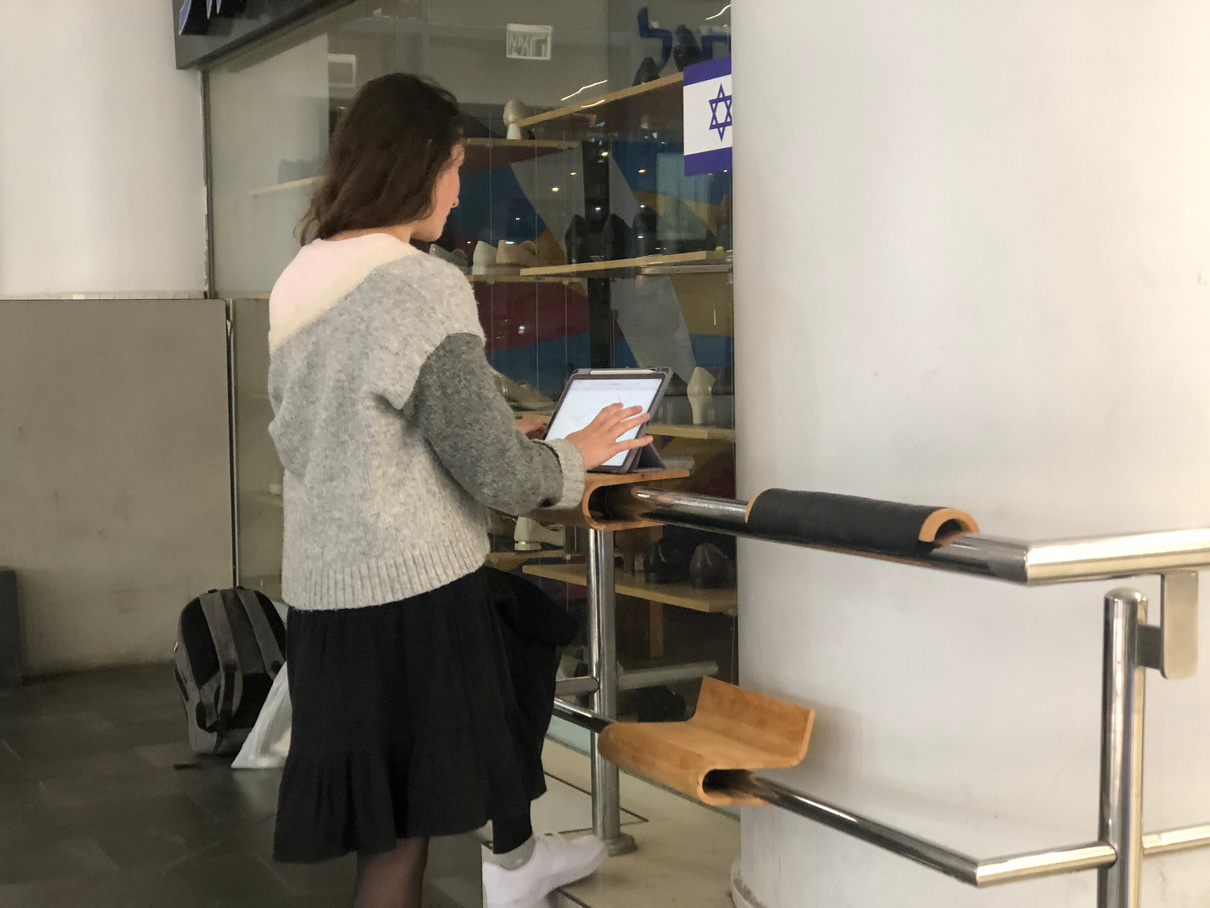
The final objects were installed in the real space. The response from passers-by exceeded our expectations — people approached the pieces naturally, used them as intended, and treated them as if they had always been there.
Next project